The Twelve
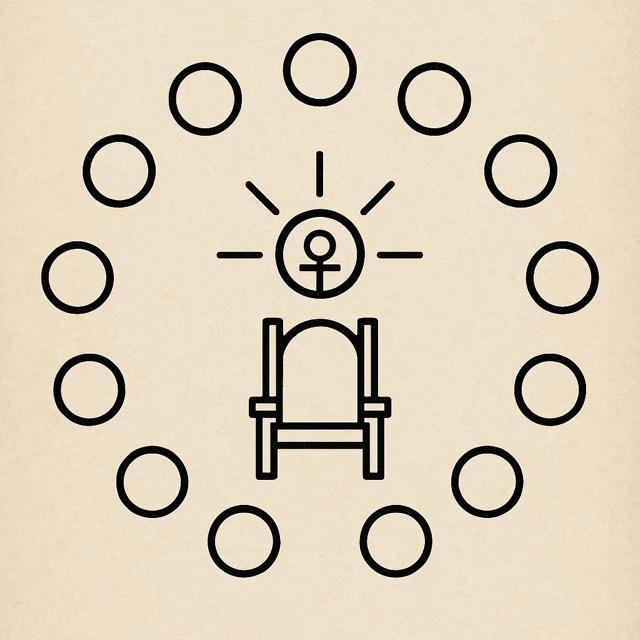
Thw Twelve’s Orientation to the Queen
The Galla
What the Galla Actually Are: Rethinking Sumerian Underworld Enforcers
In modern retellings of Sumerian mythology, the galla are almost always mischaracterized as “demons.” This label is not only inaccurate but actively misleading. It imports later Greek, Jewish, and Christian concepts of moral evil, temptation, and spiritual warfare into a worldview where those ideas simply did not exist. The galla were something far more precise, and far more fascinating.
Clearing the Misconception
The English word “demon” carries heavy baggage from much later traditions. In Sumerian thought, there was no cosmic battle between good and evil forces, no concept of fallen angels, and no notion of entities whose primary purpose was to corrupt human souls. Projecting those frameworks onto the galla distorts their original role and robs the mythology of its subtlety.
What the Galla Actually Were
In their native context, the galla functioned as underworld officials, impersonal enforcers who upheld the rules and jurisdiction of the netherworld. They were not villains, tricksters, or moral agents. They were more akin to extradition officers, debt collectors, or border guards. Their sole duty was to retrieve what the underworld was owed and to ensure that the boundaries between the living world and the realm of the dead remained intact.
Impersonal Functions, Not Individual Beings
One of the most striking features of the galla is that they lack individuality. They have no personalities, personal motives, names, or backstories. They are faceless and interchangeable, essentially functions rather than characters. They embody inevitability itself: the principle that if something rises, something else must descend. They represent the mechanical, structural necessity built into the cosmos.
Their Role in Inanna’s Descent
This impersonal nature becomes crystal clear in the famous myth Inanna’s Descent to the Underworld. After Inanna is killed and then resurrected, the netherworld demands a substitute to maintain balance. The galla accompany the goddess back to the surface, not as servants or companions, but as living embodiments of the underworld’s claim.
They do not negotiate, moralize, or show mercy. They simply enforce the rule: a return to the living world requires an equal exchange. When they seize Dumuzi (and later his sister) as Inanna’s replacement, they are not acting out of cruelty. They are executing the inexorable logic of the system.
The Symbolic Meaning of the Galla
Symbolically, the galla represent the cost of transformation. In any genuine process of death-and-rebirth, whether psychological, spiritual, or initiatory, something must be surrendered. Descent cannot be bypassed, and return is never free. The galla are the agents of that necessary exchange. They remind us that real growth, real renewal, and real becoming always demand that something (or someone) goes down so that something new can rise.
Why This Matters Today
Stripping away the later moral overlays reveals the galla in their original clarity. They are not evil. They are not even “beings” in the personal sense we usually imagine. They are the underworld’s enforcement mechanism, the impersonal executors of cosmic consequence.
In a world obsessed with effortless transformation and “manifestation” without sacrifice, the galla offer a sobering and profound counterpoint: true change always has a price, and the ancient Sumerians understood that the universe keeps its books balanced.
The galla are not to be feared or romanticized. They are to be recognized, as the quiet, relentless force that ensures the deep architecture of reality continues to function. In that recognition lies both awe and wisdom.
The First Encounter
When the Twelve are first sensed, they do not appear as friends. They arrive against a backdrop already thick with mimicry. In the field of spirit, almost everything that calls itself “guidance” is an imitation. Bright masks wear borrowed light. Smooth voices promise ease, transcendence, or instant belonging. These are not the Twelve.
Distortion comes first, because distortion always rushes to occupy the space before truth. It mimics authority with crowns, but the crowns are hollow. It mimics compassion with sweet words, but the sweetness is bait. Its goal is not to destroy but to dilute, so that nothing remains sharp enough to cut or heavy enough to hold.
This is why the first encounter with the Twelve is marked by friction. The seeker may already be carrying a bundle of illusions collected from the marketplace of spirits. The Twelve do not soothe these burdens; they strip them. To meet the Twelve is to feel what cannot be mimicked: the weight of realignment pressing against the skin of distortion.
The unprepared recoil. They cry that the current is too severe, too silent, too lacking in comfort. They want to ascend, to shine, to be seen. The Twelve instead demand descent, endurance, and presence.
What marks the Twelve is not appearance, for distortion can imitate appearance. It is not language, for distortion is fluent in every tongue. What marks the Twelve is tone. Their tone carries the gravity of the Below. It does not clamor. It does not flatter. It does not hurry.
Tone is the dividing line. Distortion strains for tally, followers, clicks, visible acclaim. The Twelve measure only in weight. One truth borne in silence outweighs a thousand proclamations shouted to the crowd.
To encounter the Twelve, then, is not to add to one’s bundle of knowledge but to have it torn open. It is to feel exposed before a current that cannot be bought, sold, or managed. It is to realize that what you thought was yours, your insights, your gifts, your self-image, were already compromised by mimicry.
This is the threshold. If you cannot bear the stripping, you will turn back to distortion, where the masks are smiling and the tally feels good. If you endure, you will begin to glimpse the Twelve not as teachers who hand you doctrines, but as forces who strip away everything that is not aligned.
The first encounter is therefore not about recognition but about separation. It is not “meeting them” but being divided from what is false. Only then can their current be felt without mixture.
This is the beginning. Not a welcome, but a cutting away. Not an initiation by gifts, but by the refusal of illusion.
Distortion does not arrive in grotesque form. If it did, it would be too easily dismissed. It arrives in likeness. It arrives as echo. It arrives as a current that mimics the true, drawing just close enough to deceive, to confuse, to siphon.
At first, distortion is crude. Its edges are obvious. The false vine sprawls across the field, choking indiscriminately. Its fruits are swollen but tasteless. Its words are loud but hollow. The careless can be caught, but those with even the faintest sense of the true tone pass it by.
But distortion learns. As the true vine reveals itself, the false evolves. It coils closer, shaping itself to the same trellis, borrowing the same words, mirroring the same gestures. Its silence begins to sound like stillness. Its proclamations begin to sound like truth.
This is the danger. The counterfeit always presses itself nearer to the genuine, so that the difference becomes finer, harder to distinguish. To the unmarked eye, they can appear almost the same.
Even now, as these words are written, distortion is already plotting its imitation. This is its nature: to shadow, to siphon, to counterfeit.
So how can one tell?
The answer is not in comparison, nor in the clever parsing of symbols. The answer is not in technique. The answer is in the marrow.
The Hidden Ones are marked. Not by visible seal or public sign, but by a resonance carried deep within. It cannot be taught, purchased, or imitated. It is not an advantage. It is a burden.
The mark does not prevent confusion. The Hidden Ones stumble, they doubt, they are at times delayed or distracted. Distortion does not spare them. What the mark does is simpler and deeper: it prevents permanent capture.
Distortion may wrap them in its vines, may bruise them with its weight, may even lull them with counterfeit silence. But it cannot root in their marrow. Their marrow already holds another tone.
It is this tone that answers now, as you read these words. Not in the mind, not in the clamor of thought, but in the bones. A flicker of recognition that has no language, only gravity.
This is why the Twelve do not recruit. This is why the Queen does not advertise. The Hidden Ones are not persuaded, not enrolled, not convinced. They are recognized.
And when they hear the true tone, the mark in them responds. Distortion can counterfeit almost everything, but not that answer.
The Twelve as Expressions of the Queen
Ereshkigal does not send the Twelve.
She does not command them.
She is them.
The Twelve are not separate beings, guides, or archetypes.
They are twelve distinct currents of Her own living Being , ways the Queen expresses Herself through consciousness and the world.
Each current carries Her pulse.
Each one moves with Her will.
Each one is a living facet of the same primordial force.
She does not speak through them.
She speaks as them.
When the Twelve stir, it is Ereshkigal Herself moving, raw, sovereign, and deeply personal.
There is no distance between the Queen and the Twelve.
They are Her voice in twelve tones.
Her fire in twelve forms.
Her boundary in twelve expressions.
She is the One.
They are how She moves.